Moving a household in India regularly presents a problem for many—your items tend to be more than the space you have! Be it moving into a smaller apartment in Bangalore or cramming furniture into a temporary storage space while work is done up, the savvy use of storage packing can help you settle in with room to spare. Here’s how you do it.
What Does Storage Packing Involve?
Storage packing is an art form. Packing isn’t just putting things in a box. It’s making things fit and be accessible and protected in the amount of space available by planning and packing carefully. Industry surveys indicate that average households fill only about 60% of a storage unit’s available vertical capacity. Adequate planning and packing can use the entire height and depth of a storage unit.
Packing doesn’t happen at the end. It starts the moment you realize you need to store something—you will need to evaluate what you have, what you need, what kind of packing you need, what materials you will use, and how you will pack your items.
How Do I Maximize Space in My Storage Unit?
If you want to get the most out of your storage space, focus on vertical thinking, clever positioning, and filling gaps. On average, studies find that users do not take advantage of at least 30% of the height of the unit. Here are a few simple methods that will greatly increase your storage capacity.
Go Vertical with Stacking
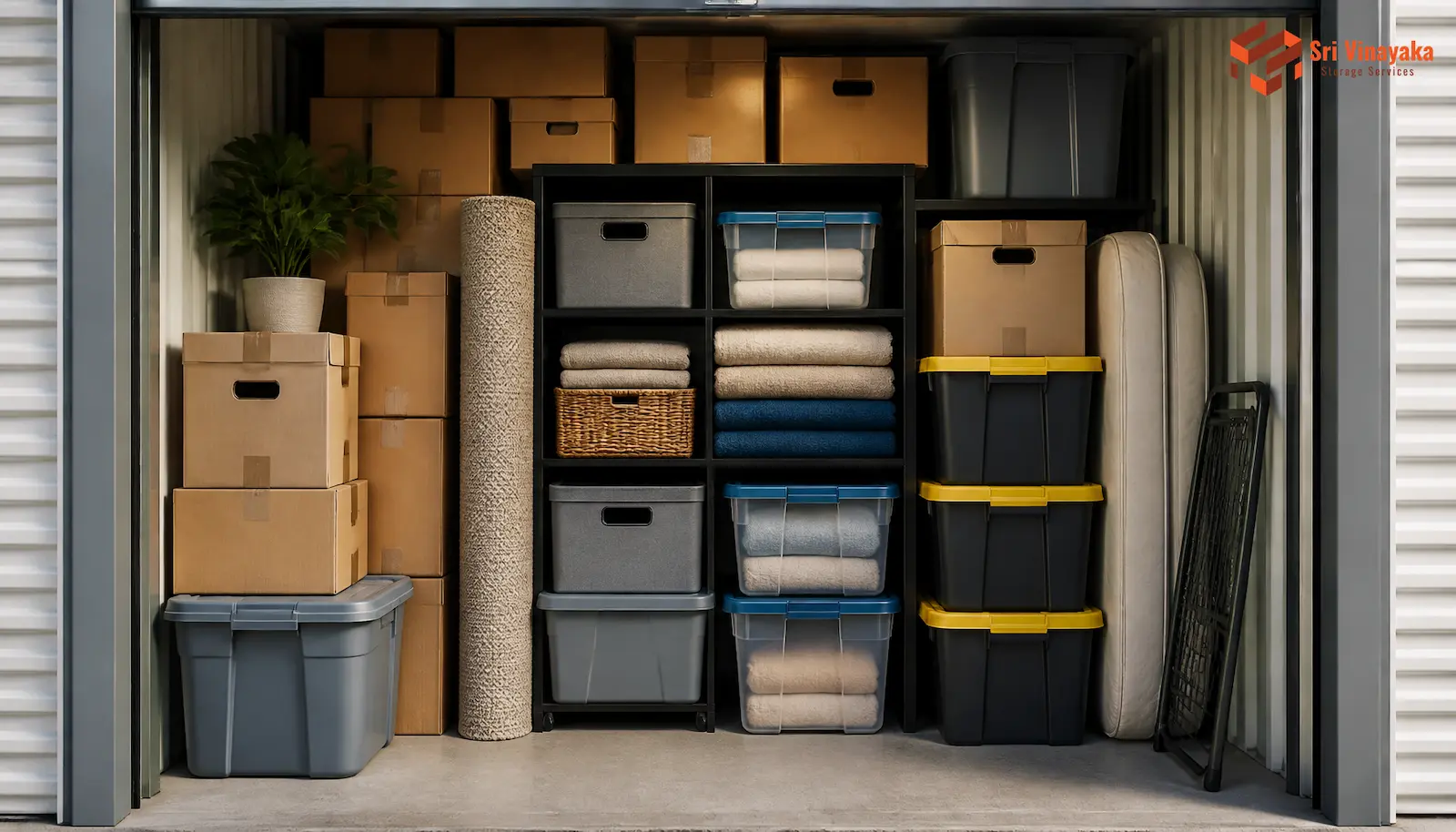
- Stack up to safe heights. Build stacks all the way up ceiling high, but leave enough room and space so nothing touches the roof of the building, so as not to allow for moisture build-up and to support air flow.
- Use uniform boxes. Boxes of similar dimensions can be stacked more stably and are more likely to reduce the gaps between boxes. Incompatible box sizes result in unstable towers and non-functioning spaces.
- Place heavy objects correctly. Heavier boxes and items must be kept at the bottom of stacks, and lighter items should be placed on top of them. This will avoid anything from being crushed.
Disassemble and Stand Items on End
- Take apart furniture. Beds, tables, and wardrobes should be taken apart into flat pieces. This removes the dead space around assembled frames, and pieces can be positioned flat against a wall. Learn more with this furniture storage guide.
- Stand bulky items vertically. Sofas, mattresses, and headboards can also be turned on their sides to give vertical height instead of a horizontal footprint. This method by itself can really reduce the amount of space occupied by furniture. See these smart furniture storage solutions.
Use Pallets and Gaps Wisely
- Elevate with pallets. If you put a product on a wooden pallet, you elevate the load off the concrete floor, avoiding moisture transfer, and offer a cushioning filler layer for stacking onto. This can be particularly important in India’s humid conditions.
- Fill gaps with odd-shaped items. Odd-shaped items such as lamps, garden tools, and sports equipment can go into the available gaps between standardized boxes.
Choose the Right Storage Partner
It is very important for residents of Bengaluru and the overall state of Karnataka to choose a storage provider that is reliable and the best. Sri Vinayaka Storage Services gives safe and air conditioned warehouses of various sizes for the needs of households, corporations, and individuals requiring long term or short-term storage. They maximize utilization of every square foot of space and at the same time keep your goods protected.
How to Efficiently Pack a Storage Unit?
Effective storage packing gets easier once you have a system to prevent duplication and obscuring of storage. As a guideline, you should follow a system where you work from the outside in, create a series of access paths, and store based on frequency of use.
Follow the Outside-In Loading Order
- Begin close to the perimeter. It is easier to work toward the center of the space than away from it. Start by getting things along the walls and rear wall of the unit. This gives structure and prevents you from getting boxed in as the unit fills up.
- Work toward the center. Once the perimeter is set, fill inward carefully so the unit remains balanced and accessible.
- Place frequently needed items last. The items you will use frequently should be located by the door. Items that are seasonal, such as holiday decorations, paperwork that will only be needed once a year for tax purposes, or seldom-used furniture, should be toward the back.
Create and Maintain an Aisle
- Book a walkway. Keep the path into the unit at least 2′ to 3′ wide from the door, so you can walk in and take objects instead of tearing apart stacks.
- Use the aisle to circulate air. The central aisle prevents a build-up of moisture and gives airflow, which aids in pest control. This is especially evident during the monsoon season in India.
Label and Inventory Your Belongings
- Use descriptive labels. Write specific contents on each box, e.g., “Kitchen-Pressure Cooker” instead of “Box 5.” Labels should be in front for easy viewing.
- Keep a master inventory. There are many benefits to keeping a master listing for your inventory. This way, you can always keep track of your products and locations and stay organized.
Create and maintain a written or electronic inventory of everything you store and where it is. This will come in handy when you try to remember where something is a few months from now and don’t want to visit your storage facility.
What Are Some Packing Tricks to Save Space?
Now that we’ve covered the basics, there are some tips and tricks to help you make the most of your unit. These tips are mainly about compression, nesting, and making good use of containers you already have.
Compress and Nest Items
- Squeeze soft items into vacuum bags. Vacuum bags greatly increase package volume for the load. Vacuum-packed bags are available for clothing, bed linen, and curtains that flatten the bulk by as much as 70%. The flattened load is stabilized by stacking and is dust-proof.
- Nest smaller items inside larger ones. Insert smaller boxes, baskets, or other containers within furniture, like cupboards and drawers. Fill up the space you would often leave empty anyway.
- Fill drawers and appliances. Use drawers, washing machines, or ovens to store smaller things. Ensure items, if fragile, are wrapped in cloth before storing.
Select Appropriate Packaging
- Invest in good boxes. Buy solid double-walled cardboard boxes that will not crush and can be stacked. For strong items, use plastic crates. For more help, see this packing and organizing guide.
- Avoid overstacking thin packaging. Do not put payload on fragile or thin cartons. Place fragile cartons on already stacked cartons, or use them for small payloads.
What to Put in Storage Unit to Keep Bugs Away
Pest control is an often neglected aspect of storage packing. Indian conditions of high humidity and heat provide a perfect breeding ground for insects and rodents. Prevention measures will not only safeguard your possessions but also keep the storage clean.
Prevention Strategies
- Keep things off the floor. Keep your things off the ground with pallets or shelving. A layer of space helps prevent pests from reaching everything.
- Use natural repellents if possible. Arrange cedar blocks, neem leaves, or lavender sachets throughout your collection. Silica gel pouches and other moisture absorbers keep moisture away from insects.
- Never keep food and organic items. Storage spaces shouldn’t be used to preserve foods. Never store leftovers or organic things that can decompose. The spaces are not a cooler or refrigerator. Read more about what not to store in a self-storage unit in India.
- Seal items inside plastic containers. To protect items most effectively, use sealed plastic containers. They help protect from pests and from moisture contamination inside cardboard boxes.
Quick Checklist for Efficient Storage Packing
- Break down furniture into flat pieces.
- Stack in strong, closed standard boxes.
- Put heavy items at the bottom and back.
- Stack weighty objects vertically.
- Make an uncluttered aisle for access.
- Define boxes clearly: for example, “kitchen utensils.”
- Create a general inventory list.
- Use pallets for raising objects off the ground.
- Add pest repellents and moisture-absorbing agents.
- Keep items that are used most near the door so they are more accessible.
The key to successful storage packing is to make something difficult manageable. Just by adopting a few simple techniques—going vertical, disassembling furniture, systematic labelling, and pest protection—you can store much more in your storage unit and keep your valuables safe.
If you live in Bengaluru or anywhere else in Karnataka and are searching for an efficient yet affordable method of storing your valuables, then check out Sri Vinayaka Storage Services, which offers safe and secure storage units of flexible dimensions to suit your storage needs.
FAQs
How long can I store items in a storage unit?
Given your arrangement with the facility, your length of storage ranges from less than a month to a year or more. Most facilities fund your storage on a month-to-month basis, so you can pay for as long as necessary. For extended needs, explore long-term storage in Bangalore.
What items should never go into storage?
Do not store any of the following: food, which will perish or expire; live plants; hazardous chemicals; flammable items; items of high sentimental value that cannot be replaced; or anything illegal or forbidden by your storage contract. For a detailed list, see what not to store in self-storage and things not allowed in storage facilities.
How do I organize a 15x30 storage unit?
15×30 units (about 450 sq ft) are suitable for multi-room home contents, vehicles, or stock for a business. Section off into zones, position vehicles or large tools toward the back, and construct walkways to access items. Use wall shelves for smaller objects. If you are unsure about sizing, use this guide on determining your storage space requirement.
Is climate-controlled storage necessary in India?
Climate controlled units are a good choice for electronics, wooden furniture, musical instruments, and documents. If you live in a humid climate, it’s a good option for all of the items in your home. Regular units can be used for just about anything else if you are smart about packing.
How much does storage packing cost in India?
Prices differ in every city, based on the size of the unit and the duration of renting. Learn more about storage unit costs in India. In Bengaluru, monthly renting prices for a 10×10 sized unit would generally be between ₹3,000 to ₹8,000, depending on location and facilities. See this 2026 Bangalore storage pricing guide for more context.