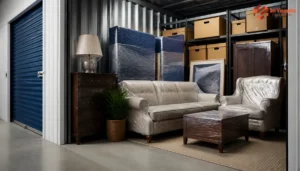
Most of us realize that we need more storage at the most inopportune times—during a late-night organization spree, while a workspace is under renovation, or when a cupboard door suddenly refuses to close.
In Indian cities, where a 2 BHK residence often offers only 900-1000 sq ft of carpet area, it’s unlikely that you’ve bought too much. Instead, the items you already own have quietly expanded to fill every available corner. The inevitable follow-up question is almost always the same: how much of it do I have to store, and where do I have to store it? For many homes, the answer starts with self-storage or a flexible household storage service.
What Does It Mean When You Say You Need More Storage?
This realization occurs when your space (cupboard, loft, spare room, garage, or mobile’s internal memory) has reached its saturation point. Storage requirements can generally be divided into two broad categories: physical space for household and operational products, and digital space required for cataloging photographs, music, applications, and documents. Physical storage does not run out of space overnight; it declines slowly as seasonally unused clothing, files, furniture, and other mementos accumulate faster than they are required.
For important papers, professional document storage services can protect records you do not need daily, while bulky household goods often need a dedicated household storage in Bangalore solution.
How Do You Figure Out How Much Storage You Need?
- Audit what you own, room by room. Walk into each room and archive what you’re storing rather than what you are throwing away. In most homes, a third of stored possessions haven’t been touched in more than a year, which changes the calculation. A structured decluttering plan helps you separate keep, donate, and store.
- Separate year-round items from seasonal ones. For example, winter clothes, Christmas decorations, cricket kits, and exam materials are seasonal, while bedding, home accessories, documents, and kitchen items are essentials and not seasonal. Use a winter clothing storage guide for garments and seasonal items storage tips for everything else.
- Measure the volume, not just the floor area. Indicate an estimate of the number of cartons, suitcases, or appliance sizes. Something like “eight large cartons, two suitcases, and a bike” is far more informative than a vague estimate. This is also the point where storage space requirement becomes a practical number.
- Add a buffer of 15 to 20 percent. You may need more than you think. Your needs today will likely differ from your needs six months from now. Having extra capacity built in saves you the hassle of having to readjust, especially for long-term storage.
- Match that number to a unit size and monthly cost. Knowing the quantity, you can now compare prices for storage units without any guesswork. Review storage unit costs in India and the Bangalore storage pricing guide before you commit.
When you require additional storage, the answer is almost never to purchase additional items to organize the items. It is about deciding what stays, what goes, and what leaves the building for good.
Signs Your Storage Space Requirement Has Outgrown Your Home
- Every horizontal surface is occupied. Dining tables, kitchen counters, and side tables become parking lots for bills, stacks of books, and unopened packages. When no surface is ever clear, the house has effectively run out of usable storage. These are common reasons to declutter your home now.
- Seasonal items live in the open. If your winter sleeping bags, ghee, or Santa saws are hidden in a corner and the loft is full, you are paying rent on space that is being used for storage. Consider seasonal storage solutions instead.
- You are buying duplicates. If you buy another mixer, another drill, or another suitcase because the last one is gathering dust somewhere, then your filing system has failed. A well-organized self-storage unit keeps frequently used items visible and accessible.
- Your workspace has been sacrificed. A cluttered study desk or ‘home-office’ corner directly affects productivity. Storage is about making the next task easy to begin, not about owning matching boxes. Smart layout ideas for optimizing space in a Bangalore home can help.
- You are storing items at relatives’ homes. Borrowed space is temporary. Once your belongings are spread across three locations, a temporary storage unit is less expensive than the hassle.
How Much Extra Space Do You Actually Need?
Storage units for Indian homes are usually priced by the square feet, but the right storage size depends as much on what you own as on your home’s size. Use this as a rough planning tool before you request a quote.
What You Are Storing | Approximate Unit Size | Typical Use Case |
Boxes, files, small appliances | 10 to 20 sq ft | Students, small families, [document storage](https://srivinayakastorage.com/services/document-storage-services/) |
Contents of a 1BHK | 25 to 35 sq ft | Job relocations, short-term shifts |
Contents of a 2BHK | 40 to 60 sq ft | Renovation, family of three or four; see [storage during renovation](https://srivinayakastorage.com/blog/storage-during-renovation-best-ways-to-protect-your-things-from-damage-and-keep-your-renovation-project-on-schedule/) |
Contents of a 3BHK | 70 to 100 sq ft | Large families, furniture-heavy homes; [furniture storage guide](https://srivinayakastorage.com/blog/the-ultimate-furniture-storage-guide-protecting-your-valuables-the-right-way/) |
Business stock and inventory | 100 sq ft and above | Retailers, e-commerce sellers, distributors; [commercial storage services](https://srivinayakastorage.com/services/commercial-storage-services/) |
Pricing varies by city and access frequency, but smaller units generally start in the low thousands of rupees per month. Always confirm whether the facility charges extra for frequent access, long-term discounts, or goods-handling assistance. These factors are explained in this guide to storage unit pricing factors.
Practical Options When You Need More Storage
- Declutter and sell or donate. It’s free and can often free up 20-30% of your current space. Start here before spending money on any solution. If you need motivation, read how to declutter your home.
- Use vertical and multi-functional storage. Tall cabinets, drawers under the bed, loft shelving, and storage ottomans convert unused height and dead corners into genuine capacity. This works best for items you need every week. Explore smart furniture storage solutions.
- Rent a dedicated storage unit. Ideal for seasonal, bulky, or temporarily displaced items. Look for features like CCTV, pest control, and flexible monthly billing rather than long lock-in contracts. Compare self-storage vs full-service storage and review safe storage in Bangalore.
- Use commercial warehousing for business stock. Retailers and online sellers need accessible, inventoried space with straightforward loading and unloading access, which is different from household storage. See warehouse services in Bangalore and commercial storage space for rent.
- Store items properly if they are going into a unit. Wrap mattresses, dismantle large furniture where possible, and keep electronics in sealed, moisture-resistant packing. Use this packing and organizing guide and learn how to protect stored items from dust, moisture, and pests.
Sri Vinayaka Storage Services offers secure, monitored storage space for both households and businesses, with units sized to match your actual storage space requirement rather than a fixed package. Whether you need a small unit for festival decor or a larger bay for shop inventory, the flexibility of monthly rental means you are never paying for space you do not use.
For specialized needs, explore festival storage services, event storage services, and personal storage services.
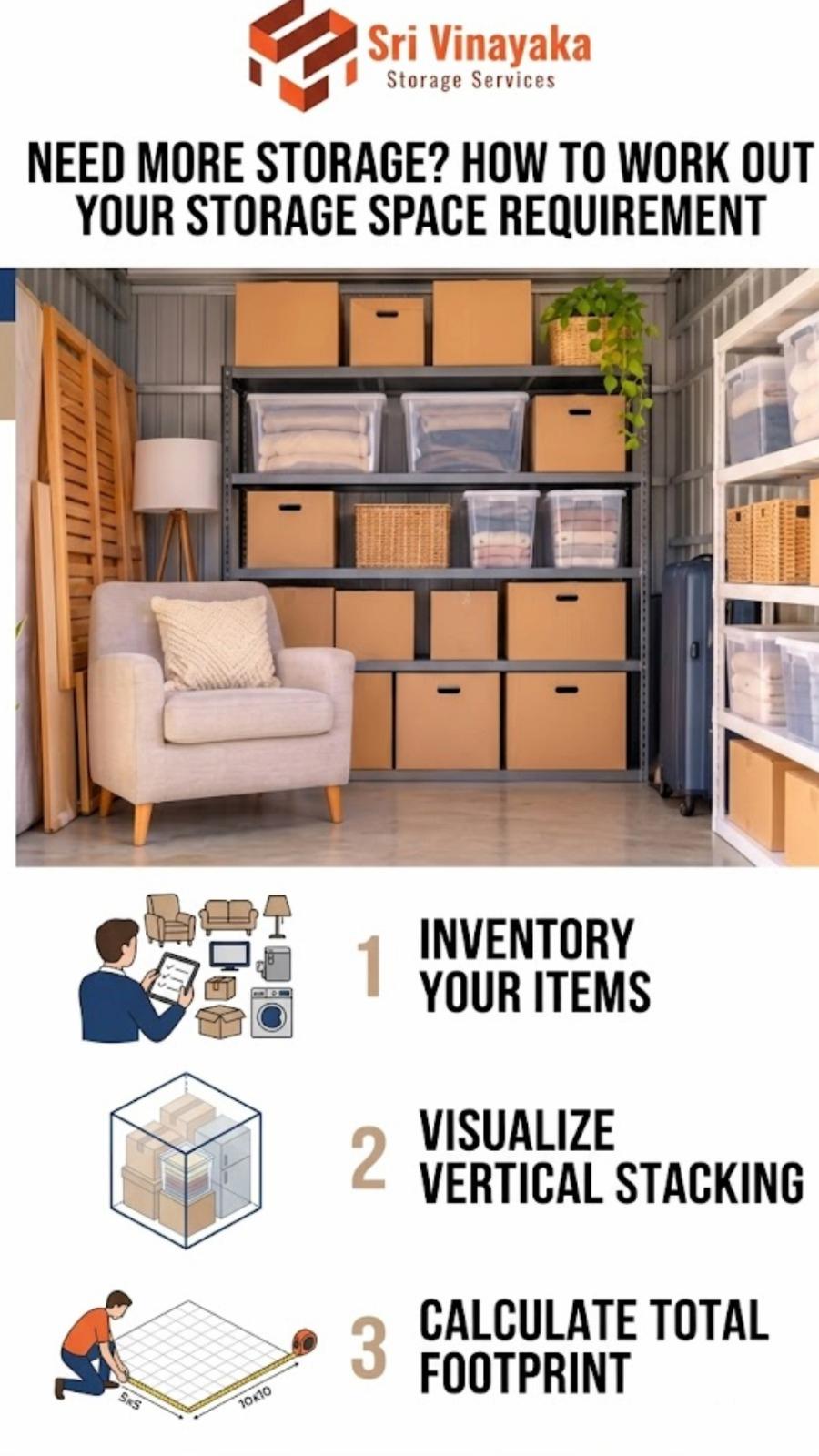
Final Checklist for When You Need More Storage
- Count and list your items before deciding on any unit size
- Separate year-round essentials from seasonal belongings
- Free up 15 to 20 percent buffer space
- Choose vertical and multi-functional storage at home first
- Rent a unit sized to your volume, not the largest available
- Confirm security, access hours, and monthly pricing in writing; use this self-storage questions checklist
Getting the storage space requirement right saves money, time, and a great deal of domestic friction. Once you know what you own and how much room it needs, the decision becomes simple and reversible. For families and businesses across India looking for secure, well-priced space, Sri Vinayaka Storage Services provides exactly that, with units you can scale up or down as your needs change.
FAQs
How long can I rent a storage unit in India?
Most facilities offer minimum terms of one month, with discounts for three, six, or twelve-month commitments. Short-term rentals are ideal for renovations and relocations, while longer terms usually reduce the monthly rate. See long-term storage in Bangalore and storage during renovation for related options.
Is it safe to keep furniture and household items in a storage unit?
Yes, provided the facility is monitored, dry, and pest-controlled. Wrap wooden furniture, avoid storing perishables or flammable items, and inspect your goods periodically. For best practices, read the furniture storage guide and this guide to climate-controlled storage facilities.
What is the difference between a storage unit and a warehouse?
A storage unit is a smaller, individually rented space suited to household belongings. A warehouse is a larger, often racked facility designed for bulk commercial inventory, with dedicated loading access. Learn more in self-storage vs warehouse storage and explore warehouse services in Bangalore.