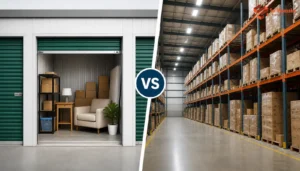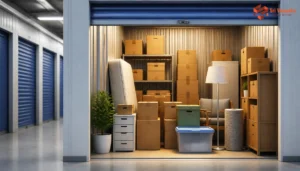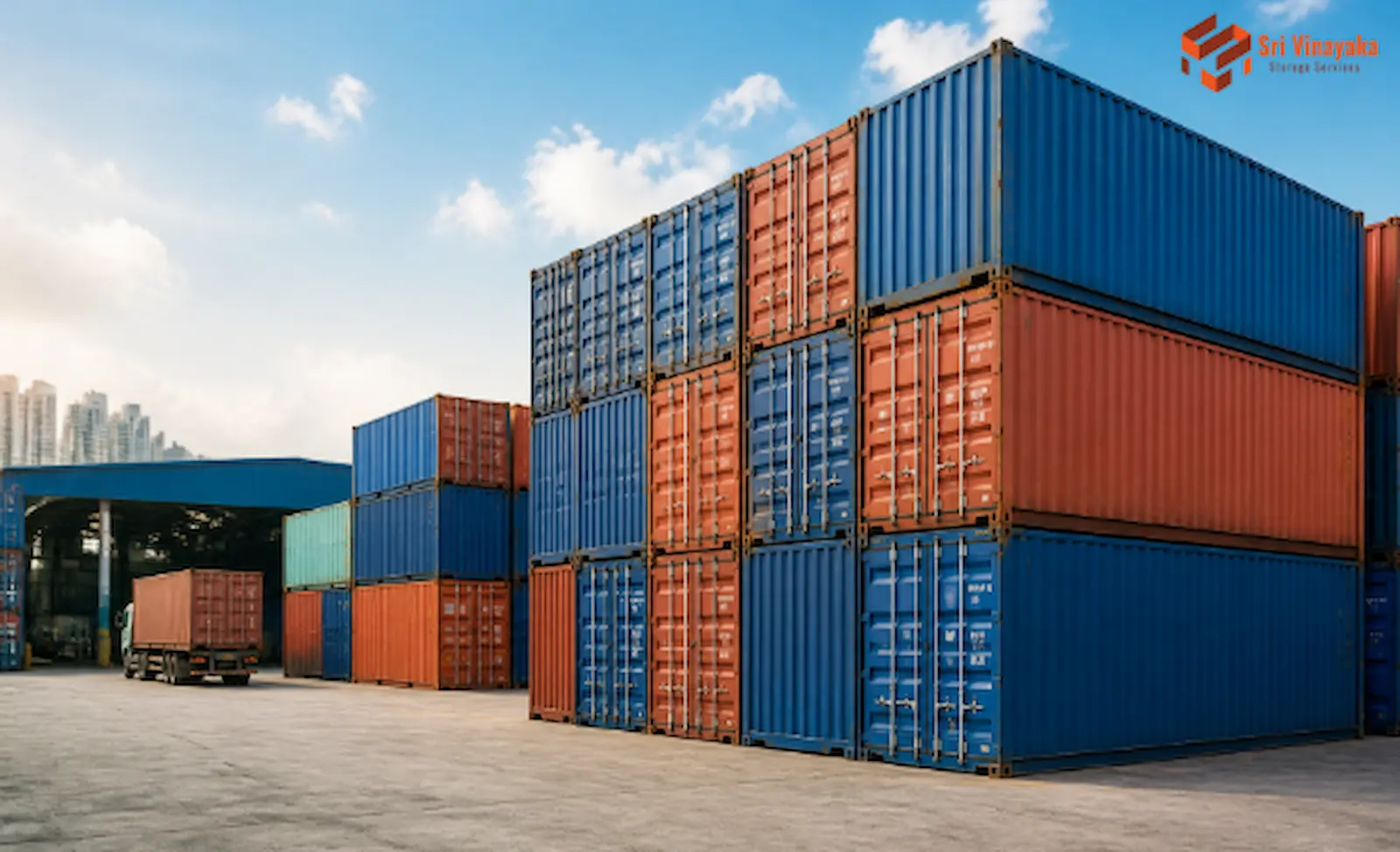
India’s warehousing industry is already pushing against its limits with the rising order volumes of e-commerce businesses and the deepening of supply chains to tier-2 cities. Companies now demand warehousing that can be set up fast, needs to be highly flexible and incurs low capital costs — container storage facilities do all of these. They are already becoming commonplace in India.
What Are Container Storage Facilities and How Do They Work?
Container storage facilities are dedicated yards or sites where businesses rent or own shipping containers for either on-site or off-site storage. These containers are standardized steel units, typically 20 or 40 feet long, that can be stacked, relocated, and customized. They work as modular extensions of warehouse capacity.
Businesses can lease a container for a fixed monthly fee, or purchase one outright and place it on their premises. In India, container storage is gaining traction near industrial corridors, ports, and logistics parks.
Which Container Is Best for Storing?
When it comes to choosing a container, it will depend on what you are storing and for how long. There are a few options available in India.
- Standard Dry Van Containers — the twenty or forty-footers that provide the most flexible space for general merchandise, inventory, and equipment. These are the most frequent type of container storage in India and cater to virtually all business niches.
- Refrigerated (Reefer) Containers — ideal for transport of temperature-sensitive cargo like pharmaceuticals, FMCGs. Refrigerated containers are equipped with refrigeration units, making them ideal for cold storage of goods in the food and healthcare sectors.
- Open top / High Cube Container — suitable for heavy-duty equipment, appliances, and machinery. Can be loaded from the top as well as vertically to take advantage of the extra room. These are used widely in the construction and manufacturing industries.
- Altered Containers — equipped with shelving, lighting, ventilation, or partitions. These alterations are suitable for specific business requirements such as retail pop-ups or storage of workshops.
Knowing these alternatives is the first step in determining if a container storage facility is suitable for your business.
Key Benefits of Container Storage for Businesses
The cost, speed, and safety trifecta is driving container storage adoption in India. Companies that used to wait for months to get their warehouse fit-outs installed can now set up safe storage in a matter of days. And it’s all due to these three reasons.
- Quick Setup — Containers can be set up quickly whereas a godown, involves, permits, and construction with the same. Quick access to Storage Capacity.
- Affordable — for small, medium, and even large-sized businesses, container storage is far more cost effective than renting an entire warehouse. Your initial outlay is low, and the monthly costs are fixed.
- Weather and Pest Resistance— Steel containers can withstand the rain, humidity, and pest infestation that generally accompanies monsoons. As a result, they can be used reliably outside or semi-permanently outside.
- Security – Locks, high security doors and panels restrict and prevent unauthorised access. CCTV or security guards can be engaged for more comprehensive peace of mind.
- Scalability — Containers can be added or taken away to accommodate changes in inventory, providing real operational flexibility.
Combined, these advantages position container storage as a feasible substitute for traditional warehousing in India.
Industries That Benefit from Container Storage Facilities
Almost every Indian industry can benefit from container storage – from e-commerce fulfillment to manufacturing supply chains. And every industry can gain access to flexibility that’s hard to find in a permanent warehouse.
- E-commerce, Retail — Fast increases in inventory returns last-mile stock close to delivery hubs. Fast scale up to handle period sales and spikes in demand.
- Manufacturing — keeping raw materials, spare parts and finished products on-site, near the factory floor. Modular units enable these types of manufacturing processes.
- Food and FMCG — Dry storing for cans, bottles, tubs, trays etc. for FMCG packaging or out of season food. The sealed building structure retains everyday goods away from insects and dampness.
- Healthcare — Store temporary and overflow medical stock and equipment. Secure units enable hospitals to increase capacity without building more infrastructure.
- Tools and Material Storage — keeping tools and material secure at a busy jobsite. Portable containers are on the move with the project so jobsite changes are smooth.
Flexibility is another advantage that container storage offers and is something that godowns are unable to provide.
Quick Glance at Container Storage Solutions: Benefits, Costs and Uses for Businesses
- What: Modular steel units providing secure and versatile storage.
- Advantages: Quick to install Affordable Weather resistant, Modular.
- Price: ₹6,000 –₹25,000 per month for rent.
- Best Uses: E-commerce, manufacturing, FMCG, healthcare, construction.
- Where to Begin: Collaborate with a reliable container storage partner close to you.
Container storage facilities provide Indian companies with a quick, efficient, secure and flexible solution to conventional storage spaces – without the huge cost of building godowns.
FAQs
What is the lifespan of a container ship?
20–30 years then gets disposed of or repurposed. Storage containers last 20+ years without much wear and tear.
Are container storage facilities suitable for long-term use?
Yes. Well-maintained steel containers with anti-corrosion coatings can act as storage units for over two decades.
Are permits required for container storage in India?
Yes. There could be municipal or land-use approvals needed where you are for placing containers.