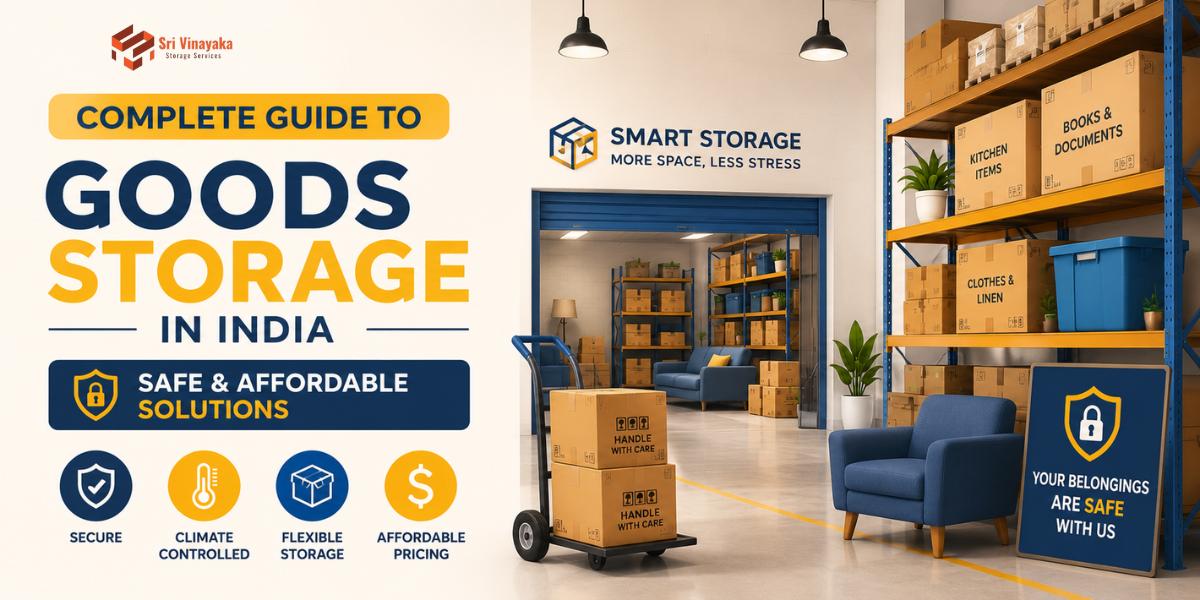
The median income of Indian families, and the ensuing demand for large houses, might be the talk of the nation, but space as a concept in Indian metros is more precious than ever.
Be it a nuclear family in a modest Mumbai apartment, a career hating IT professional settled in Bangalore or a Delhi family under renovation, there is a demand for goods storage that has never been higher.
Learn how to get the most out of self storage in the metros through this quick guide to the self storage industry.
What is the Storage of Goods?
Storage of goods means the entire process of keeping raw materials, finished products or persons’ possessions safely in a warehouse until the goods are wanted or needed.
However, the usual logistics definition of storage is unloading and parking the goods, inspecting input of goods in stock, and storing the items in a warehouse.
Indian consumers should be aware of the complete procedure of storage of goods for setting expectations on warehousing services.
What does the goods storage process involve?
Storage is not just about throwing things into a room, it is a systematic workflow set for safety and simplicity as:
- Unloading and Docking: As your goods arrive at the warehouse, the goods are unloaded into the dock at the specific dock bay so that damage is not incurred.
- Inspection and recording: Items/boxes are checked for any damage, signs of fragility or special conditions.
At the same time, a detailed inventory list is produced that is entered into the Terminal Warehouse Management System (WMS). This computerized log enables you to know precisely what you are holding.
- Physically Placement and Distribution: Containers are placed according to weight, breakability, and times of use into the storage unit. Heavy items will be placed on the bottom, boxes not often used placed at the back of the storage unit and seasonal items can be at the deep end.
Having an inkling of this process makes you realize how much better professional goods storage is in comparison to exclusive use of any vacant room for the same.
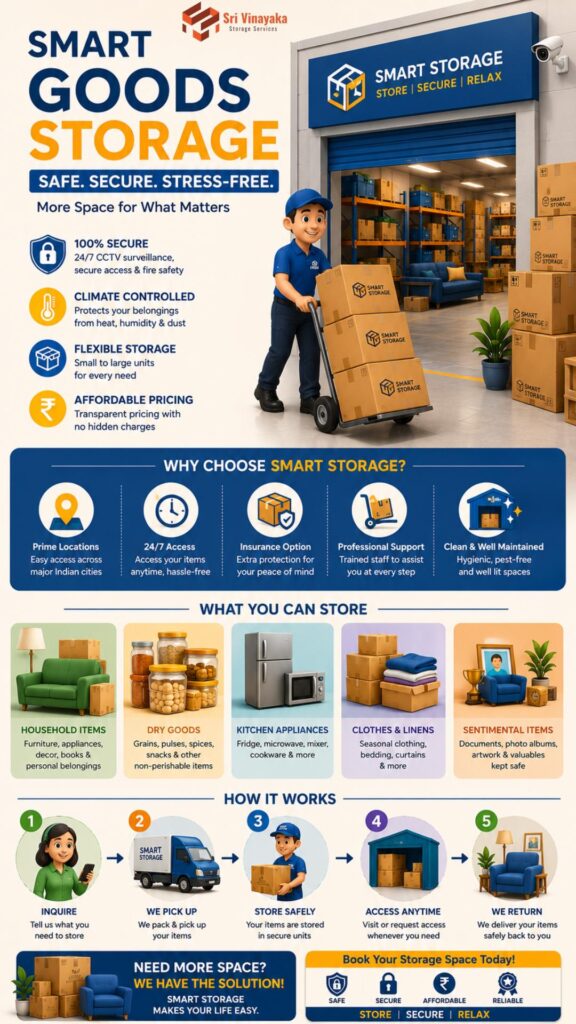
When you choose a reliable provider like Sri Vinayaka Storage Services, you get a very open and transparent process where these very features never get compromised.
Types of Goods Suitable for Storage
Anything can be stored from household products to business inventory. But getting the picture of the items that storage can take is always a good idea.
Household goods storage – what can you store?
When it comes to the household goods storage what you can store ? Indian households often possess a variety of possessions that can become too numerous and clutter up the house.
Typical accepted possessions are:
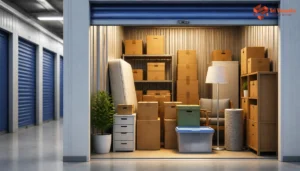
- Kitchen Appliances: Fridge, micro-wave equipment, mixer, tables etc. can be safely stored away when not in use during long holidays or home renovation.
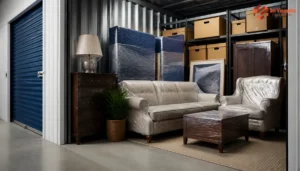
- Furniture: Sofas, beds, dining tables and cupboards are other less commonly stored items. Fireplaces are also kept in accommodation with fully functioning climate control, which keeps wood from warping and fabric from mould.
- Clothes and Linens: Heavily winter woolen jackets, christmas, roman costume can be stored in accessible covers or containers.
- Of sentimental value: If you have photo albums, children’s drawings or family heirlooms that you do not wish to part with but have no room for, you can file them away.
Dry goods storage containers – preserving non-perishable items
Dry goods storage containers- for the storage of items either non-perishable or less perishable.
Dry goods storage containers are needed for both business and home use, for storing grains, pulses, spices, dried noodles and other contained foods, the key factor in choosing storage containers is that they should be air-tight, moisture proof and resistant to pests.
When storing dry goods for a considerable time a food grade plastic or glass jar should be used with a clips on lid.
The dry goods should be labeled indicating contents and date of storage for stock rotation FIFO4, FIFO (First In First Out) method, helps minimize waste.
Good food storage containers – keeping edibles safe
Good food storage containers – preserving food. We want our good food storage containers to be of high quality material, such as BPA free plastic, tempered glass or stainless steel so that they don’t leach any chemicals.
For an Indian kitchen we need something that seals well, like a jar with a silicone gasket and a locking lid for spices and homemade powders.
Of course, good storage containers are not worth much if the store is not clean, cool and dry, as many professional goods storage facilities now have climate controlled zones just for food products.
Goods Storage Methods and Systems
The way in which your items are stored within a storage facility can have an important effect on all these factors – efficiency in space usage, ease of access and safety.
What are the common storage techniques?
- Single Stacking
Involves placing each item by itself, and not stacking any on top of each other. It has the most flexibility and easiest access but a greater use of floor space.
Recommended for delicate items or irregular shaped items such as musical instruments or glass top tables. - Double or Block Stacking
When similar objects are stacked directly above each other, typically using cardboard or pallets.
This method utilized the most space out of any stacking method and is typically used for relatively uniform objects such as book cartons, sealed tool boxes, or holiday decorations. Though there were limitations to this method as well. - CAP (Cover and Plinth) Storage
A cost saving approach where commodities are stored in raised wooden or concrete surfaces (plinths), covered with a tarpaulin.
Useful for bulk storage e.g. sacks of rice or building supplies prevents access to damp floor space at minimal cost.
Pallet racking and bin storage systems
Pallet racking systems are used for consumer or professional stocking of larger volumes and inventories – these steel structures keep pallets with goods high in the storage rooms for optimal use of vertical space.
Smaller elements like spare parts, documents and tools are stored in bin storage systems with labelled drawers and tenants for easy access and management.
Inquire whether a provider offers storage facilities with these options – Sri Vinayaka Storage Services can adapt storage arrangements to your requirements.
Security and Safety Protocols for Goods Storage
For anyone who needs to store valuables, security is the first priority. India’s contemporary goods storage services provide security measures comparable to those found in bank lockers.
What security features should you look for?
- Round-the-Clock CCTV Monitoring: All common areas such as doorways and hallways need to be monitored by camera with images stored for no less than 30 days. This will discourage robberies and acts of violence and also record evidence should anything happen.
- UL Locks on individual Units: Where possible, you should be able to have a proprietary high security lock on your unit (for example, so only you have a key). The property must not hold the master key or another key unless you tell them you want them to do this in writing.
- Controlled Access Systems: The building and floor entries shall require a unique PIN, fingerprint scan RFID etc. This will document everyone who entered and exited.
- Fire and Pest Protection: Prefer institutions with smoke detectors, fire extinguishers, sprinkler systems, and periodic pest-control applications. Preventing termites and rodents is particularly important in India’s climate.
Dangerous goods and combustible liquids storage compatibility chart
If the owner of a business or someone else for that matter, intends on storing dangerous goods or combustible liquids then one cannot do so without understanding the dangerous goods and combustible liquids storage compatibility chart.
This informs one of what chemicals can be, and must be stored together and what cannot. For example –
- flammable liquids such as petrol or paint thinner should never be stored adjacent to oxidizers such as bleach or pool chlorine.
- Acids need to be stored in separate acid resistant cabinets with guaranteed spill containment.
- Very few home storage facilities cater for dangerous goods, but non-household storage suppliers will have an appropriate license, ventilation system or both, and permit this type of storage, but only under highly regulated circumstances and after observing compatibility.
Always check compatibility before hand over.
Cost of Goods Storage in India
Getting to grips with pricing enables you to plan for the future and avoid surprises. In India storage costs are dependent on:
What is the cost of safe storage in Bangalore?
If you look at market data, the price of a cheap self-storage service in Bangalore ranges from about Rs.24 /mo for documents storage (small locker or bookshelf) to about Rs.99/mo for household and personal storage. (All prices will be double if you’re talking about a full closet.)
Small units provide about 20 to 50 square feet of space. Larger units for furniture or a few rooms can cost Rs. 2000/mo to Rs. 8,000/mo, depending on the size needed, location, and climate control availability.
Most good-sized self Storage providers will price by the usage per month you pay just for the space you actually occupy, with no long-term lock-in contracts. Make sure you ask for a quote inclusive of taxes, access charges and insurance options.
Factors that influence storage space pricing
- Location: Similar facilities are located more expensive nearer to city areas, transport/local authority sharing depots, or transport capital and operating expenditure, and less expensive further out.
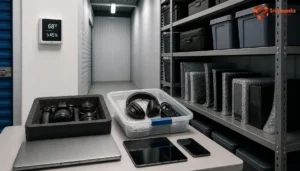
- Climate Control: Air-Conditioned and Humidity-Controlled units for fragile items such as electronics, artwork or leather goods, 30-50% additional to base.
- 24/7 accessibility: 24/7 access facilities cost more than those with limited business-hours accessibility.
- Duration: Some providers provide price reductions depending on the duration of the commitment; a long term commitment, say 6 months or over.
Quick Checklist for Choosing the Right Goods Storage in India
How to quickly run through a checklist for selecting suitable goods storage facilities in India?
- Determine the volume: Try to think how many cu. ft you will need. If you stack your cartons properly, it could need 40 percent less space.
- Check for security measures: Are there: CCTV, locks on individual doors, monitored access and security guards?
- Compare price options: Opt for monthly billing with clear prices. Skip requests for large upfront payments.
- Review customer reviews: In particular, recent reviews on cleanliness/pest problems and claim settlement for damages.
- Go see it in person: Pictures lie. Visiting the facility shows real cleanliness, bright lights, and easy access.
Verify insurance possibilities: Some include insurance with basic price estimates, but some provide third-party insurance packages for high-cost armatures.
Conclusion
In India’s densely populated cities, storing goods is no longer a luxury – it has become an essential part of life and business. Whether you are looking for a short-term storage option during the house-moving period, seasonal storage of household things, or secure warehouse for your business inventory, being conversant with the concepts, equipment pricing aspects, and safety measures will assist you in making wise decisions.
If you are a resident of Bangalore or its nearby areas and looking for a perfect combination of reasonable cost, safety, and customer-oriented service, then Sri Vinayaka Storage Services will be the right choice for you.
Determine your requirements, explore storage centers, and raise the relevant queries – your valuables deserve nothing short of professional treatment.
FAQs
May I keep perishable food items in a normal storage unit?
Regular storage units do not have temperature control systems that can prolong the shelf life of perishable items such as fresh vegetables, dairy products, or cooked meals. Still, with climate-controlled facilities you may store non-perishable items such as pulses, rice, and spices in proper containers. Be sure to find out from your provider the list of permissible items before storing.
What distinguishes self-storage from full-service storage?
When self-storage is chosen, you do all the packing, transporting along with the loading of your materials into the unit. You get to have full ownership and access rights.
On the other hand, full-service storage entails the company coming to your place to pick up packing storage, and delivering your items when asked – however, the price is much higher than self-storage.
What can I do to stop my goods from being attacked by mold and mildew?
Include silica gel sachets with your items, choose plastic or metal containers instead of cardboard ones, and never put anything that is moist. If climate control is provided in your storage facility, go for it especially during the monsoon season.
Maintain small spaces between boxes for ventilation purposes, and also refrain from placing items directly onto concrete floors – instead, make use of pallets or wood planks.
Are my stored products automatically covered by insurance?
Not all the time. Some facilities offer minimum protection (usually Rs.5,000-Rs.10,000) along with the rental but this is hardly enough for precious items.
Inquire about third-party insurance options or take a look at whether your home contents policy extends to off-site storage. Separate warehouse insurance is the best option if you are dealing with business inventory.
What do I face if I fail to remit my monthly installment?
Most storage providers have a grace period of 5-15 days. Beyond that, they might impose a late payment penalty, limit your access, or finally sell the contents to the highest bidder in order to recover the dues – although this is very infrequent and is the final step in the procedure after legal notices.
Always keep your provider informed beforehand if you anticipate payment problems. Sri Vinayaka Storage Services supports customers with flexible payment schedules and reminders to help them keep their commitments.