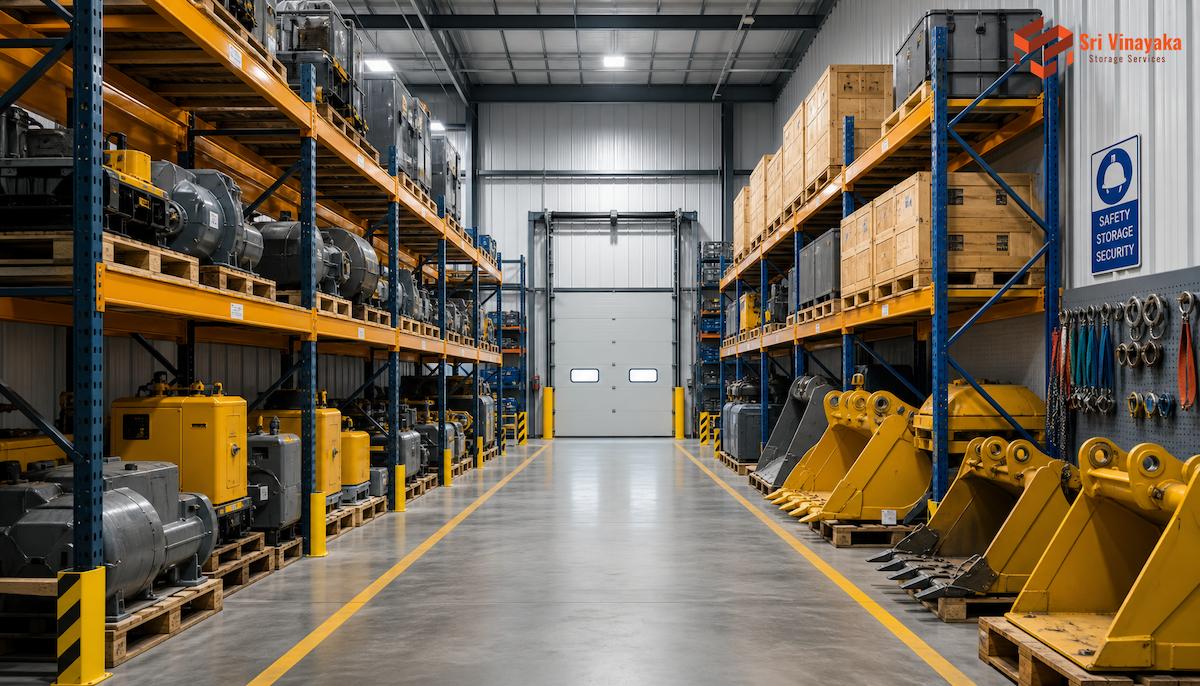
Proper storage of industrial equipment is a critical, yet often overlooked, component of operational efficiency and asset management. In India’s rapidly growing manufacturing and logistics sectors, unplanned downtime due to equipment failure costs businesses crores annually. A significant portion of this damage stems not from active use, but from improper storage.
Whether you are managing a small workshop or a large warehouse in Mumbai, Delhi, or Chennai, implementing a robust storage strategy protects your capital investment, ensures worker safety, and extends the lifespan of your machinery. Partnering with a trusted provider like Sri Vinayaka Storage Services can help you design the perfect system for your needs. This guide explores the best practices for industrial equipment storage, from pre-storage cleaning to advanced shelving systems.
What is the Best Practice for Storing Tools and Equipment?
The best practice for storing tools and equipment is a comprehensive, systematic approach that combines environmental control, very thorough preparation, and smart organization. It is not merely about finding a corner to park a machine; instead, it is a deliberate act to mitigate risks such as rust, corrosion, and wear and tear of the machinery. An effective plan will ensure that the equipment is readily available with minimal safety risks for use when it is needed, to cut down downtime and expenses related to maintenance.
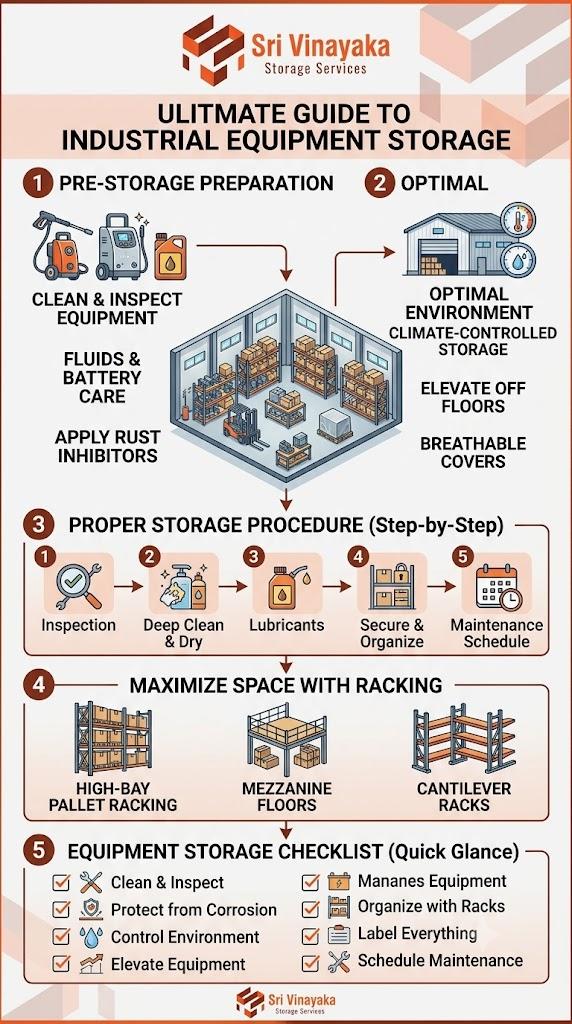
Pre-Storage Preparation: The Foundation of Safe Storage
Before any equipment enters storage, it must undergo a rigorous cleaning and inspection process. This step is non-negotiable for long-term preservation.
- Thorough Cleaning and Degreasing: Remove all dirt, grease, and debris using industrial-grade cleaners. This prevents corrosive buildup and deters pests that are attracted to organic residues.
- Fluid Management and Battery Care: For engine-powered equipment, change the oil and coolant, top off fuel tanks, and add a stabilizer. Disconnect batteries and store them separately on a trickle charger to prevent discharge and acid leaks.
- Apply Protective Coatings: Spray exposed metal parts, such as hydraulic rods and unpainted surfaces, with a rust inhibitor or light oil. This creates a barrier against moisture and humidity.
Creating the Optimal Storage Environment
Where you store the equipment is just as important as how you prepare it. The environment must be controlled to prevent damage from the elements.
- Prioritize Climate-Controlled Indoor Storage: The ideal location is a clean, dry, indoor facility where temperature and humidity are regulated. This protects against the extreme heat of an Indian summer and the dampness of the monsoon season. Consider exploring climate-controlled storage facilities for optimal protection.
- Protection from Floor Moisture: Even indoors, moisture can wick up from concrete floors. Always elevate equipment using pallets, blocks, or heavy-duty industrial storage racks to allow air circulation and prevent rust on the underside.
- Use Breathable, High-Quality Covers: Cover equipment with breathable, waterproof fabric to shield it from dust and condensation. Non-breathable plastic covers trap moisture, which can accelerate corrosion.
How to Store Equipment Properly: A Step-by-Step Guide
It is important that the proper procedure is followed when storing equipment and all necessary steps carried out before cleaning, as it prevents you from leaving out any critical elements. A thorough and well-organized system will not only help your whole team understand the best method of handling this situation, it will also make them more reliable. A step-by-step procedure will prevent damage to the equipment starting from the moment it is stopped to the time it is used again.
- Step 1: Conduct a Full Inspection and Repair: Check the equipment thoroughly for existing damage, wear, or leakage before you clean it. Immediately fix the damaged parts; storing a damaged machine is only going to result in a bigger repair job.
- Step 2: Deep Clean and Dry: With the help of a pressure washer or air compressor, get rid of all the dirt and contaminants from the machine. Make sure the equipment is dry, as going to the next step with the equipment still wet will trap moisture, causing it to rust and deteriorate the quality.
- Step 3: Apply Lubricants and Rust Inhibitors: All the moving parts, chains, and bearings should be properly lubricated. Coat all metal surfaces, mainly those found on very large machines such as heavy bulldozers or forklifts, with thick rust inhibitors.
- Step 4: Secure and Organize: Your belongings should ideally stay there. Smaller tools can either be left on a shadow board or sorted into a labeled box. For machines that are bigger, it is necessary that they are stopped on a flat surface and that they are in fact equipped with the appropriate devices for safety and stability. In addition, parking them on leveled ground with appropriate locks engaged would make the machines secure.
- Step 5: Implement a Maintenance Schedule: It is quite common for people to forget the need to carry out regular maintenance during the period of equipment storage. This is a case of false belief where a person expects the storage environment alone to be so ideal that it will keep the device from breaking even when it has the problem of, say, rust.
The Role of Industrial Storage Shelves Racks in Organization
Although controlling the environment is a crucial factor that enables a well-maintained tool or equipment, a well-set up storage facility plays a role in making sure the stored items are arranged, easy to locate, and safe for storage. The main support or foundation of a good storage system is the industrial storage shelves racks. Racks or shelves that are industrial will help you utilize a lot of space which may be lying as waste in your factory, turning it into a clean, organized, and very useful area.
Maximizing Space with Vertical Racking Systems
One great way of optimizing a warehouse for storage is through the use of space vertically.
- High-Bay Pallet Racking: These are high-bay pallet racks that are perfect for storing palletized material, a very big number of materials, or even whole machines. With the help of their height, these systems are able to raise storage density in factories a lot.
- Mezzanine Floors: With a mezzanine, you create one more storage area inside a building which is already in use. You can utilize the space of such a floor for keeping stock which is not so heavy like spare parts above the main floor, so you actually save a lot of space.
- Cantilever Racks: Cantilever racking systems are the ones which allow for the unobstructed loading and unloading of bulky, irregularly shaped items. Such items typically include the storage of pipe boards, lumber, and the like. Their racks are made such that their front does not present any obstruction.
Quick Glance at the Industrial Equipment Storage Checklist
Here is a small guide listing the main tips when storing industrial equipment, so that nothing gets missed.
- Clean & Inspect: Always clean and inspect equipment before placing it in storage.
- Protect from Corrosion: Apply rust inhibitors and lubricants to all metal surfaces.
- Control the Environment: Use a climate-controlled, dry, indoor facility.
- Elevate Equipment: Use pallets or racks to keep equipment off the floor.
- Organize with Racks: Utilize vertical industrial storage shelves racks to maximize space and improve accessibility.
- Label Everything: Implement a clear labeling system for easy retrieval.
- Schedule Maintenance: Perform regular checks and maintenance during the storage period.
Conclusion
In the long term, your storage strategy could affect your profits due to reducing downtime, increasing the service life of equipment, and making the workplace safer. By adhering to the best practices described throughout this document (i.e., thorough preparation & environment control together with intelligent use of industrial storage shelves racks), one can be able to change a storage area from a liability into a key asset of one’s business.
Sri Vinayaka Storage Services acts as a consultant and a provider of premium quality storage systems to help you establish your business goals on facility layout — safer and more efficient profitable environment. For businesses looking to optimize their space, exploring our commercial storage services can provide tailored solutions for your industrial needs.
FAQs
What are good storage practices for industrial environments?
Good storage includes keeping the area clean and uncluttered, using labels correctly, storing heavy items close to waist height, and also keeping clear aisles. The most important thing is to create a situation where, for each item, you have a place assigned to it so it is neither too hard to reach nor poses danger to people and equipment.
What are the 4 types of material handling?
The four categories of material handling equipment include:
- Storage and Handling Equipment like racks, shelves, and bins
- Bulk Material Handling Equipment like conveyors and elevators
- Industrial Trucks like forklifts and pallet jacks
- Automated Systems like robots and AS/RS
Every type of equipment serves a unique purpose in the movement, storing, and managing materials.
How often should I inspect stored equipment?
The minimum standard is to check stored equipment at least once a month. In the case of crucial and expensive machines, conducting weekly inspections is better. You should look for signs of rust, pests, fluid leaks, and flat spots on tires at every inspection. If you start up engines on a monthly basis and run hydraulics, you are ensuring that seals stay lubricated and the components remain working.
Is outdoor storage ever acceptable for industrial equipment?
Storing industrial equipment outdoors is the worst storage option. This kind of storage should only be used if the items being stored are protected against weather or if the tools are being regularly used. You must have heavy-duty, UV-resistant, and waterproof tarps over your equipment and place it on a gravel or concrete base. Only then can the equipment be prevented from sinking into mud and you will have proper drainage. For a safer alternative, consider using a safe storage facility that offers proper protection.