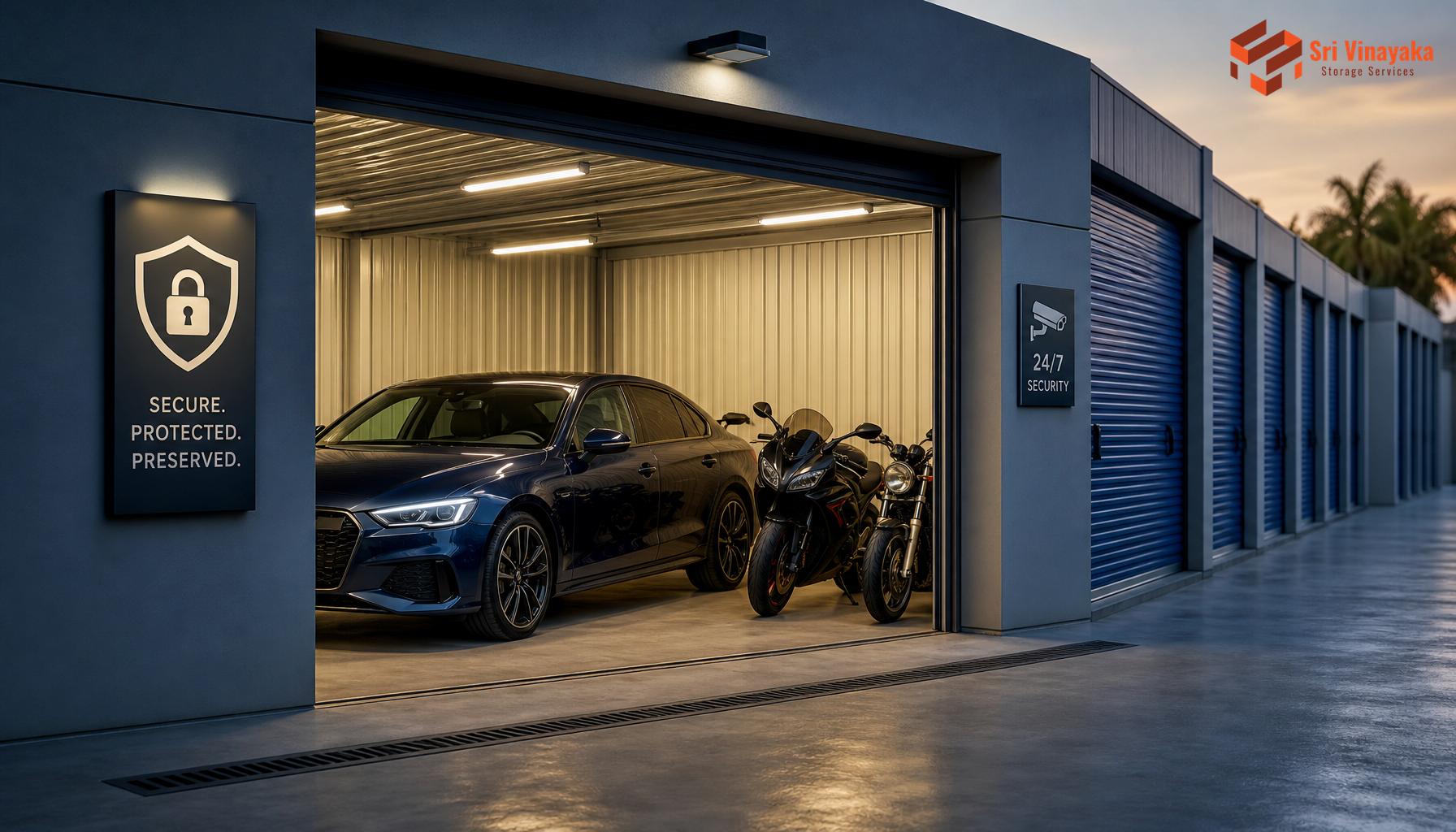
For quite a few vehicle owners in India, the concept of putting a car or motorcycle into storage for a long time might be a little surprising. But factors like moving to the city, going away for jobs abroad for a long time, or having one more vehicle that is not used daily create the need for suitable vehicle storage for the long term.
Simply put, vehicle storage means keeping a car, motorcycle or any other vehicle in a safe and often exclusive place for anywhere from a few weeks to several years. The main aim is to keep the vehicle safe from theft, weather damage, and gradual mechanical deterioration. Whether you require car storage for a classic car or motorcycle storage for a bike which you use occasionally only, knowing the ins and outs of the process is the key to make sure your vehicle is kept in a condition that is fit for use when you get back to it.
How to Prepare Your Vehicle for Long-Term Storage
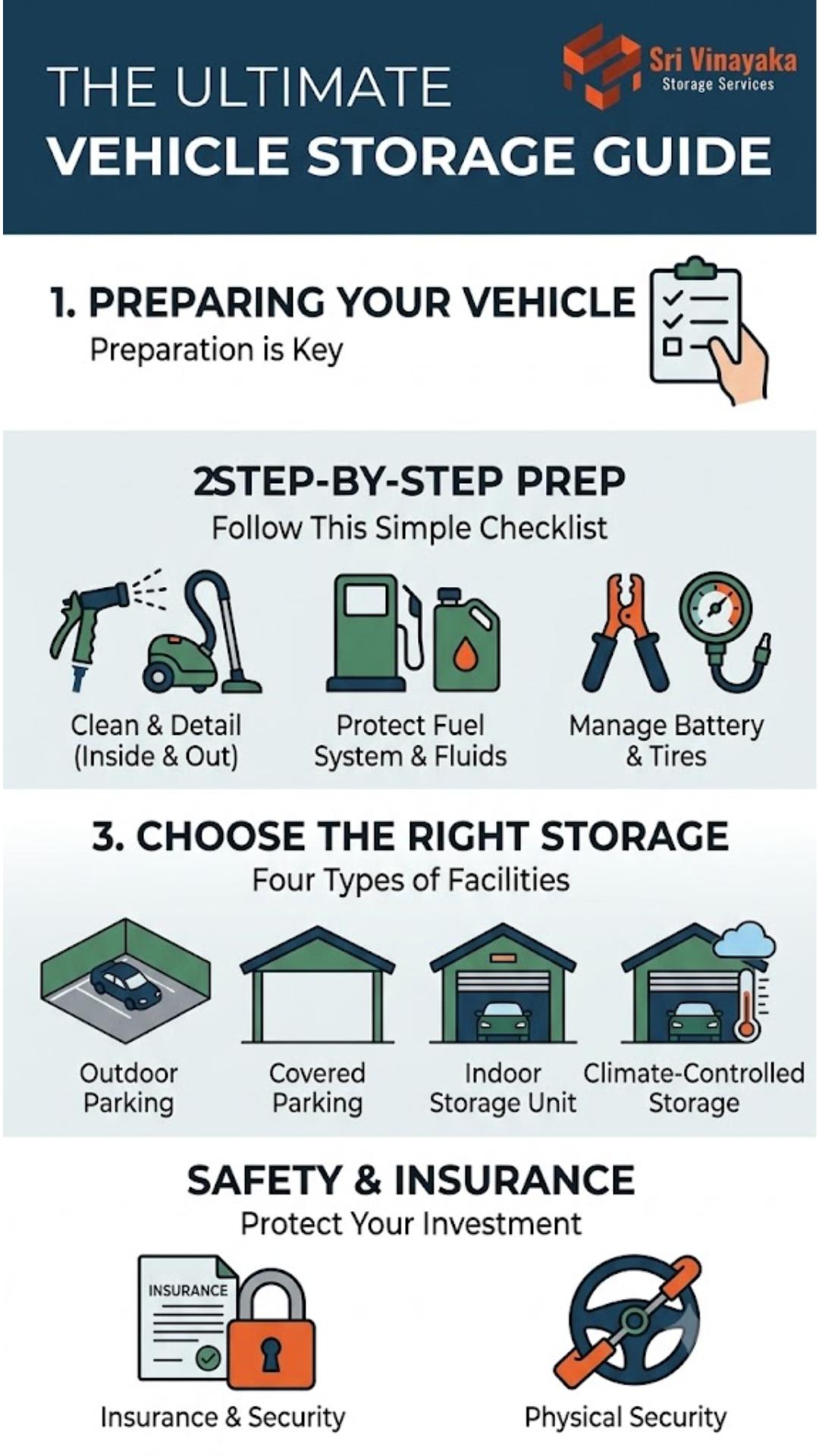
The most vital part of the vehicle storage process is the right preparation. Missing this part may result in vehicle repair costs and even damage beyond restoration. As a result, fluids will deteriorate, the battery will run down and pests might occupy your engine compartment. Creating and following a step-by-step checklist will help you steer clear of these typical mistakes.
Clean and Detail the Vehicle Inside and Out
It’s better to wash and wax your car before just thinking about parking it. If paint is left for a long time under dirt, bird droppings, and tree saps then it can get ruined. At the same time, inside is better removed of all food, trash, and any personal stuff to keep out rats, cockroaches, and other pests. You should vacuum the carpets and seats thoroughly. A clean vehicle is a less attractive house for rodents, and it prevents mold and mildew, two of the common issues in Indian cars because of the humidity of the region.
Protect the Fuel System and Engine Fluids
Leaving a vehicle with an almost empty fuel tank is one of the biggest errors that are often made. When the tank is full, moisture cannot condense inside it which can bring rust and fuel contamination. Make a top-notch fuel stabilizer addition to the tank and then fill the tank. After that, turn on the engine and let it run for a few minutes to circulate the fuel mixed with the stabilizer to the whole fuel system. This is a very important step for any auto storage situation. Besides that, right before storage, carry out an engine oil and oil filter change because the engine oil that is old and dirty has acids in it that can cause corrosion of the engine components that are inside.
Manage the Battery and Tires Properly
Car batteries naturally discharge over time, and a completely dead battery can be permanently damaged. The best solution is to use a trickle charger or battery maintainer, which keeps the battery at an optimal charge level without overcharging. If you don’t have access to power, you can disconnect the battery, but be aware it will still lose its charge.
For tires, the weight of the vehicle can cause flat spots to develop. To prevent this, over-inflate the tires to the maximum recommended pressure. An even better solution for long-term car storage is to use car dollies to lift the vehicle’s weight off the tires entirely.
Choosing the Right Storage Facility for Your Needs
The type of storage facility you choose will depend on your budget, the vehicle’s value, and how long you plan to store it. Not all storage options are created equal, and what works for a rugged SUV may not be suitable for a vintage motorcycle.
What Are the Four Types of Storage Facilities?
Generally, there are four types of storage facilities you can consider for vehicle storage:
- Outdoor Parking: This is the most basic and affordable option. Your vehicle is parked in an open, fenced-in lot. It offers protection from theft and vandalism but leaves the vehicle exposed to the sun, rain, dust, and extreme temperatures. This is suitable for short-term storage of durable vehicles.
- Covered Parking: This offers a roof over your vehicle, protecting it from direct sunlight and rain. It’s a step up from outdoor parking but still leaves the sides of the vehicle exposed to the elements and dust.
- Indoor Storage Unit: This is the most common choice for serious car storage. Your vehicle is stored inside a lockable, individual garage-like unit. This offers excellent protection from weather, theft, and pests. For motorcycle storage, a smaller unit is often sufficient.
- Climate-Controlled Storage: This is the premium option. The unit maintains a consistent temperature and humidity level. This is essential for classic cars, vintage vehicles, and any vehicle with sensitive electronics, as it prevents rust, mold, and dry rot of rubber seals and interiors.
Why Choose Sri Vinayaka Storage Services for Your Vehicle?
If you are looking for a trustworthy partner for your vehicle storage requirements in India, it is necessary to pick a place that really knows the local conditions. Sri Vinayaka Storage Services offers a number of secure and good condition vehicle storage options including for cars and motorcycles.
To keep your vehicle away from the elements of the Indian climate, our storage facilities are equipped with options for indoor units that are clean, dry, and secure. A storage unit for a car that is used for a couple of months or long-term auto storage, in either case, you get the peace of mind that comes from the knowledge that your vehicle is safe, watched, and always ready for use. We emphasize cleanliness and security so that your vehicle stays as good as new.
Vehicle Storage Safety and Insurance Considerations
Vehicle storage is not only about tangible preparations but also needs making safety and insurance arrangements. Think about how you will protect your vehicle before relinquishing the keys.
Putting a Car in Storage: Insurance and Security
Do not take it for granted that your regular motor insurance still covers the vehicle while it is in storage. It is quite common for insurance policies to have limitations or exclusions on the coverage of vehicles that are not being used for a certain period. So, it is best to get in touch with your insurance company and talk about “storage insurance.”
As the vehicle will not be used, such insurance normally offers comprehensive coverage for fire, theft, and vandalism at a lower premium. Physical security-wise, always use a steering wheel lock or a wheel clamp. In case you are using a public parking facility, make sure to choose the one that has 24/7 CCTV monitoring, gated entry, and individual unit alarms. A good security step is also keeping an additional set of keys with a trustworthy person.
Final Checklist for Successful Vehicle Storage
Just before you park your vehicle, check if you have done everything by using this quick checklist:
- Clean: Wash, wax, and thoroughly vacuum the interior.
- Fuel: Fill the tank and add a fuel stabilizer.
- Fluids: Change the engine oil and top off all other fluids (coolant, brake fluid).
- Battery: Connect a trickle charger or disconnect the battery.
- Tires: Over-inflate to max PSI or use jack stands/dollies.
- Pests: Place steel wool in the exhaust pipe and air intake, and use mothballs or dryer sheets in the cabin (not in a way they can stain).
- Cover: Use a breathable car cover to protect the paint from dust.
- Documentation: Inform your insurance company and keep the registration papers in a safe place.
Proper vehicle storage is a way to protect your vehicle over time. Doing these things will not only keep your vehicle in great condition but when you next use your car or bike, it’ll start and run as if you just put it away – no costly repairs or mood changes! For more tips on protecting your belongings, check out our guide on how to organize a self-storage unit for frequent access.
FAQs
How to store a car for 3 months?
When storing a car for three months, consider following the complete checklist: cleaning car, adding fuel stabilizer to a fully filled gas tank, changing oil, over-inflating tires, and connecting battery maintainer. The best protection can be offered by an indoor, secure storage unit.
What is the difference between short-term and long-term storage?
There is no need to change oil or use fuel stabilizer for short-term storage (a few weeks to 3 months) but a battery tender is still a must. Long-term storage (over 6 months) will require all full preparation steps, including fluid changes and pest prevention. For extended periods, consider our long-term storage in Bangalore solutions.
Can I store a motorcycle in a car storage unit?
Yes. Even one or two motorcycles will have enough space inside of a standard car storage unit. Protection from the weather and theft is excellent. You may also find smaller and less expensive units that are more exactly for motorcycle storage.
What are the basic items required to be in a vehicle for emergencies after storage?
When you first drive your vehicle out of storage, make sure you have the following: extra tire and jack, a first-aid kit, jumper cables, a flashlight including extra batteries, as well as some water and non-perishable snacks. They are necessary for any roadside emergency.
Where can I find reliable car storage near me?
If you require professional and secure vehicle storage, locate places like Sri Vinayaka Storage Services that offer indoor units that are clean and well-monitored. You can explore our storage services in Bangalore for reliable options. By searching “car storage near me” on the internet you will find local options but always check the facility’s security and cleanliness yourself before making commitments.