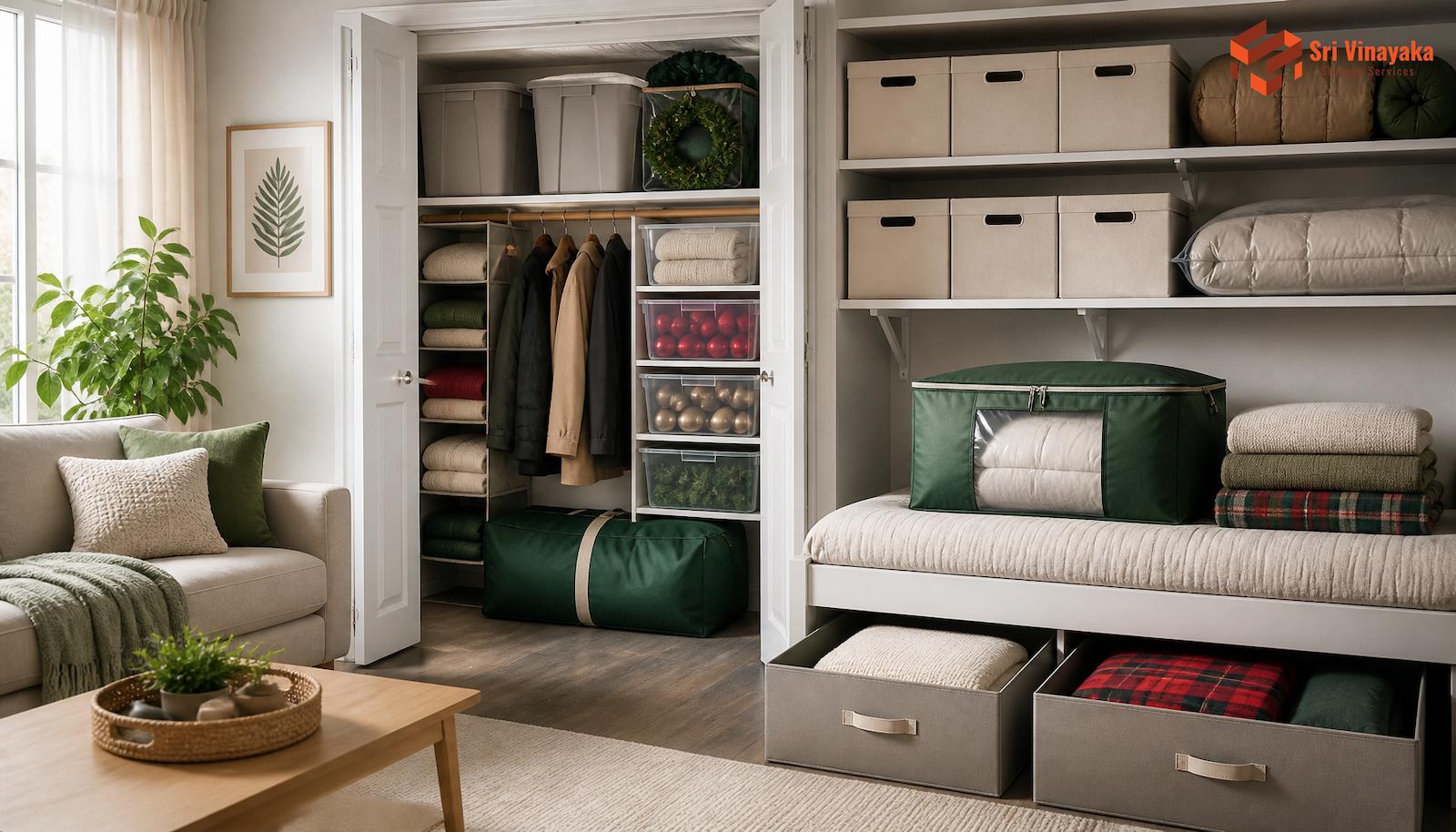
Most Indian homes lose nearly 20% of usable living space to items used only a few weeks a year. Festival decorations, woollen clothes in winter, extra bedding for guest rooms, and sporting goods quietly occupy cupboards, lofts, and balconies for ten months.
Add Bengaluru’s compact apartment layouts and joint-family storage habits into the mix, and the problem compounds. Effective seasonal items storage isn’t about buying bigger cupboards. It’s about treating storage as a rotating system where every item has a place, a container, and a retrieval plan.
What Is Seasonal Items Storage and Why Does It Matter in Indian Homes?
Seasonal items storage refers to the organized containment and rotation of belongings used only during specific months or occasions. Diwali lights, Ganesh Chaturthi decorations, wedding-season sarees, winter quilts, and monsoon rainwear all fall into this category.
Unlike everyday items, they occupy prime household space while sitting idle for most of the year. In Indian cities like Bengaluru, where average apartment carpet areas are shrinking and lofts are shared among family members, treating these items as an afterthought leads to chaotic cupboards and damaged goods. A proper system protects your belongings from dust, moisture, and pests while freeing up daily-use space.
Which Items Count as Seasonal or Off Season Item Storage?
- Festive Decorations: Diwali diyas, string lights, rangoli stencils, and Ganesh idols occupy significant space. They need padded, labelled bins to survive the eleven months of the year when they are not displayed, and moisture-absorbing sachets prevent mold during monsoon.
- Winter and Summer Clothing: Woollens, heavy blankets, and summer cottons that rotate twice a year are prime candidates for off season item storage. Vacuum-sealed bags compress quilts and sweaters to a fraction of their volume, and storing them in an upper loft keeps them safe from dust.
- Guest Bedding and Furniture: Extra mattress rolls, folding cots, and pillows used only when relatives visit need dedicated storage. Under-bed rolling bins work well because they slide out easily without disturbing the guest room layout, and labelling prevents confusion during last-minute arrangements.
- Sports and Hobby Equipment: Cricket kits, badminton rackets, camping gear, and seasonal gardening tools often get scattered. Grouping them in one sturdy, lidded bin near the balcony or utility area keeps them accessible yet out of the way.
- Holiday Kitchenware: Idli steamers, special biryani pots, and seasonal sweet molds are bulky and awkward. Stacking them by size inside deep cabinets with shelf dividers prevents them from toppling and frees counter space.
Without a rotation system, these items pile up in random corners. A structured approach to seasonal items storage transforms that dead weight into a manageable, retrievable inventory.
How to Store Things When You Have No Space at Home
When floor area is exhausted, the answer lies in reclaiming the volume you already own. In Bengaluru’s older apartments and smaller flats, vertical space above doorways, behind cupboards, and inside unused wall niches often goes unnoticed.
The principle is simple: shift stored items upward and inward before spending money on new furniture. This approach delivers instant storage without renovation and works regardless of how small your home is.
Which Hidden Storage Spots Do Most Homes Overlook?
- Under-Bed Space: The area beneath your bed can hold four to six rolling bins of seasonal clothing or decor. Investing in bed risers lifts the frame by a few inches, creating enough clearance for slim, wheeled containers that slide in and out effortlessly.
- The Back of Every Door: Over-the-door organisers turn unused door panels into vertical storage for shoes, accessories, and even festive decor pouches. Choose fabric versions with multiple pockets to avoid scratching the door, and label each pocket for quick identification.
- Short-Width Walls: Narrow wall strips between furniture pieces or beside windows can hold wall-mounted shelves or pegboards. These dead zones are ideal for hanging tools, string light bundles, or craft supplies that would otherwise clutter drawers.
- Inside Double-Duty Furniture: Storage ottomans, beds with built-in drawers, and sofas with lift-up seats combine everyday function with hidden capacity for seasonal items storage. A storage bed alone can replace the need for an entire cupboard.
- Upper Cabinet and Loft Corners: The topmost shelves of wardrobes and kitchen cabinets are often wasted because they are hard to reach. Reserve them exclusively for off season item storage, and use clearly labelled, lightweight bins so you can pull them down easily once or twice a year.
These overlooked spots collectively recover a significant portion of your home’s wasted space. When combined with a consistent labelling habit, they turn an overstuffed home into an organised one.
Storage Ideas for Small Spaces on a Budget
You don’t need expensive storage units to manage seasonal items. With a little planning and resourcefulness, off season item storage can be organised for under a few hundred rupees. The goal is to choose containers that fit your available space precisely and protect your belongings adequately.
- Clear Plastic Bins: Transparent bins let you see contents without opening them, which is invaluable when searching for a specific Diwali decoration. They are affordable, stackable, and available in multiple sizes at local markets, and they keep dust and insects at bay.
- Fabric Baskets: Soft, woven baskets work well for bulky but light items like quilts and pillows. They collapse when empty, saving space in the off season, and they blend into bedroom decor without looking industrial.
- Vacuum-Sealed Bags: These remove air from clothing and compress winter wear to a fraction of its original volume. They are especially effective for woollens and heavy blankets, and they protect fabric from moisture and pests during monsoon months.
- Repurposed Cardboard Cartons: Old shipping boxes can be reinforced with tape and lined with fabric to serve as storage for non-fragile items. They cost nothing and work well for short-term seasonal rotation, though they should not be used for long-term storage in humid conditions.
- DIY Cloth Covers: Drape a simple tablecloth or spare bedsheet over stacked bins to conceal them and keep dust off. This tablecloth hack costs almost nothing and instantly makes a stack of plastic containers look tidy in a bedroom or living area.
Budget-friendly seasonal items storage is less about spending and more about choosing the right containers for your space. Even a single well-labelled bin can reduce clutter dramatically.
How to Organise When You Don’t Have Enough Space
Organising a space-constrained home begins with reducing what you store, not just rearranging it. The decluttering-first principle is widely recommended because it prevents you from wasting precious space on items you will never use again. Once you have purged what is unnecessary, the remaining items can be categorised, zoned, and rotated systematically.
How to Organise a Small Room with Too Much Stuff?
- Purge Before You Pack: Sort every item into keep, donate, and discard piles. If you have not used a decoration or garment in over two years, it is unlikely you will use it again. This step alone can reduce storage volume by a third.
- Sort by Category, Then by Season: Group items by type—decor, clothing, bedding, kitchenware—and then divide each group by season. Sorting by holiday, colour, or type makes retrieval intuitive, and it ensures that similar items are stored together rather than scattered across the house.
- Label Every Container Clearly: Write the contents and season on each bin or box so you never have to open multiple containers to find one item. Labelled containers save time during festival preparation and reduce the temptation to re-sort everything each year.
- Stack Heaviest Items at the Bottom: When stacking boxes in a loft or on a shelf, place the heaviest ones at the base. This prevents crushing and keeps the stack stable, especially in earthquake-prone regions or when children access the storage area.
- Pad Fragile Decorations: Wrap glass ornaments, ceramic idols, and delicate lights in bubble wrap or old newspaper before placing them in bins. Add a moisture-absorbing sachet to each container to guard against humidity-related damage during the monsoon.
A well-organised seasonal storage system pays for itself in saved time and preserved belongings. The effort invested once simplifies every future rotation.
Space-Saving Ideas for Small Bedrooms and DIY Clothes Storage
Bedrooms are often the most storage-starved rooms in Indian homes. For adults who need their bedroom to function as a restful retreat, not a warehouse, the challenge is to store off season item storage without sacrificing aesthetics. DIY solutions for clothes and accessories can be both practical and visually pleasing.
- Bed Drawer Conversions: Many bed frames have hollow bases that can be fitted with sliding drawers or simple roll-out trays. This DIY clothes storage idea adds hidden capacity without changing the room’s footprint, and it keeps winter wear accessible yet invisible.
- Hanging Wardrobe Organisers: Fabric shelves that hang from the wardrobe rod create multiple tiers for folded clothes, scarves, and accessories. They are inexpensive, require no installation, and can be rolled up and stored when not needed.
- Over-the-Door Shoe Pockets for Accessories: Pocket organisers designed for shoes also work for socks, belts, and small festive accessories. Repurposing them costs nothing and uses vertical door space that would otherwise be empty.
- DIY Rolling Cart Under the Bed: A shallow wooden or plastic tray fitted with castors can slide under the bed to hold shoes or folded garments. This homemade solution is easy to build from materials available at any local hardware store.
- Slim Wardrobe Dividers: Installing vertical dividers inside a wardrobe keeps stacks of clothing upright and prevents them from collapsing. This small change improves visibility and makes the wardrobe feel larger.
These ideas demonstrate that space-saving for small bedrooms does not require professional installation. Simple, thoughtful modifications can double your usable storage.
When Home Storage Isn’t Enough: Professional Seasonal Storage Solutions
Even after maximising under-bed space, lofts, and vertical walls, many households reach a point where no more can be squeezed in. Guest bedding for extended family visits, large quantities of festive decor, and business inventory all compete for the same limited square footage. At this stage, off-site storage becomes a practical answer.
Sri Vinayaka Storage Services offers secure, affordable storage solutions for households and businesses in need of extra space. Their facilities are designed to protect seasonal items, furniture, and personal belongings from dust, moisture, and pests, with flexible access so you can retrieve items whenever you need them.
For families who rotate seasonal items regularly, a dedicated external storage unit eliminates the annual struggle of reorganising every cupboard. Whether you are downsizing, renovating, or simply running out of room, professional seasonal storage provides a clean, organised alternative to cluttering your living space.
Final Checklist for Seasonal Items Storage
- Declutter first—donate or discard anything unused for over two years.
- Choose containers that fit your available space precisely.
- Compress bulky textiles using vacuum-sealed bags.
- Utilise under-bed, over-door, and vertical wall spaces.
- Label every container with contents and season.
- Pad fragile items and add moisture-absorbing sachets.
- Stack heaviest boxes at the bottom.
- Consider off-site storage when home capacity is exhausted.
Seasonal items storage does not have to be a losing battle against clutter. With the right containers, a labelling system, and a willingness to use overlooked spaces, even the smallest Bengaluru apartment can stay organised year-round.
When your home truly cannot hold another bin, professional services like Sri Vinayaka Storage Services provide a reliable safety net so your belongings stay safe and your living space stays liveable.
FAQs
How do I store things when I have absolutely no space at home?
Use vertical and hidden spaces first. Over-the-door organisers, under-bed bins, and wall-mounted shelves reclaim volume without adding furniture. If these are exhausted, consider a rented storage unit for items you use only once or twice a year.
What is the best way to store seasonal decor?
Clean and dry each item before packing. Wrap fragile pieces in bubble wrap, use clear labelled bins, and add a moisture absorber to guard against humidity. Store bins in a cool, dry place away from direct sunlight.
How do I organise a small room that has too much stuff?
Start by decluttering. Sort items into keep, donate, and discard piles. Then categorise what remains by type and season, label containers clearly, and store the least-used items in the hardest-to-reach spots.
Are vacuum-sealed bags safe for long-term storage of woollens?
Yes, provided the garments are completely dry before sealing. Vacuum bags protect against moisture, dust, and pests. However, natural-fibre fabrics benefit from occasional airing, so open and refold them once a year.